01
Support desk replies
Draft answers for the questions your team repeats every week. Pulls from help articles you already wrote, then hands the draft back for a person to check.
Customer service, public-sector service desks

AI adoption, one step at a time
A Tallinn-based educational resource for Estonian companies and public-sector teams. We describe how teams pick a first pilot, handle their data, and keep a person in charge of decisions.
Demos and calls stay exploratory — no licence, no checkout.
Weekly, traceable, reviewable work sits best in step one. Pick one row — not the whole company.
What we look at
Look for work that repeats weekly, has clear inputs, and leaves a trace you can review. A team at Pärnu mnt area offices often starts with one inbox or one spreadsheet — not the whole company.
01
Support desk replies
Draft answers for the questions your team repeats every week. Pulls from help articles you already wrote, then hands the draft back for a person to check.
Customer service, public-sector service desks
02
Voice call coverage
Answers routine calls when the front desk is busy. Multilingual phone answering that transfers anything unusual to a member of staff, with a written handoff.
Hotels, restaurants, small clinics
03
Feedback grouping
Turns scattered feedback into a short, defensible list. Groups tickets, reviews, and survey answers into themes, and links each quote back to the behaviour behind it.
Product teams, ecommerce, education
04
Listing and catalogue drafts
Reads item photos and turns them into search-friendly text. Gathers research on an item and writes a first description for a person to check and publish.
Second-hand goods, antiques, marketplaces
The list is a starting frame, not a menu of products. Any pilot you pick still gets an owner, a source of truth, and a review routine before it goes live.
Local context
Estonia runs several state-led efforts at once. They share one idea: implement AI across sectors through skills, new solutions, and export capacity, with high-impact pilots in healthcare, education, industry, energy, and the public sector. We follow these programmes as context, not as our own projects.
2019
Bürokratt named
Public services start being planned as conversational, national-scale support rather than separate portals.

2021
AI strategy drafted
National planning shifts from isolated experiments to a coordinated programme with named sectors.

2023
Eesti.ai and AI Leap
Skills programmes run alongside state pilots, so public-sector staff meet AI as a tool they use, not a headline.

2026
Adoption, in practice
The useful reading is on the ground: which pilots are running, and who is still checking the output.
For background with names and roles, read our AI in Estonia Landscape page. For the method, read How Pilots and Updates Work.
Hospitality
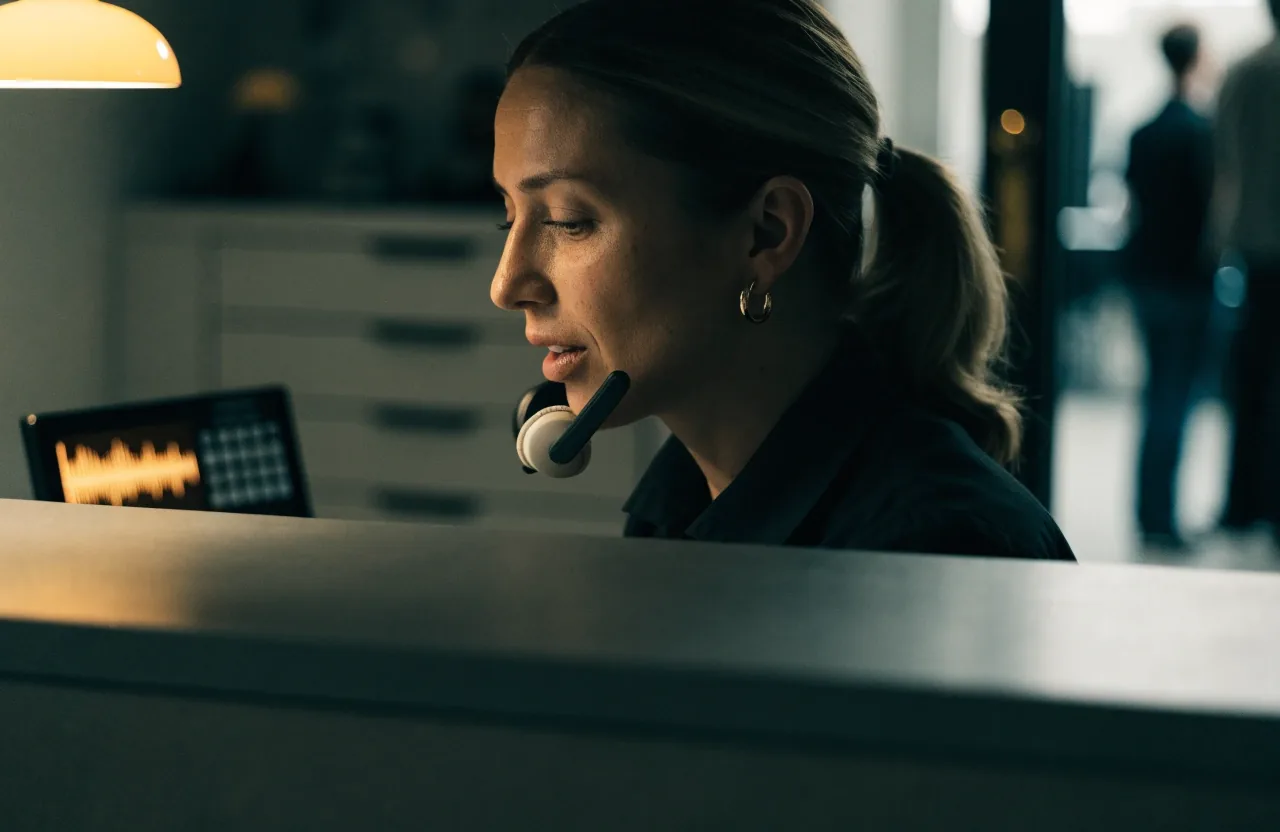
A small hotel or restaurant misses calls during rush hours, and that is where this pattern helps. SVARA AI builds multilingual AI voice agents for hospitality that answer calls around the clock and respond to guest questions — checking availability and managing reservations, then transferring anything complex to staff.
Staff still handle complaints, payments, and unusual requests. Think of it as call coverage with a clear handoff, not a replacement for the front desk. The rule to write down before you buy: every handoff has a name behind it.

Product work
Mergo combines customer feedback with product analytics, grouping support tickets, reviews, and surveys into themes. It connects qualitative comments with usage data so teams can prioritize problems to solve first. If your team argues about what to fix next, this is the shape to study. You still decide the roadmap — the tool only makes the pile readable, with quotes linked to behaviour.

Listings and processes
Two patterns show where Estonian products are heading. Auctologue uses AI to aggregate and organize research for antiques, collectibles, and second-hand goods, analyzes photographs of items, and turns gathered information into search-friendly product descriptions. Brida turns recurring business and technical processes into governed AI work through packs that combine agents, tools, context, workflows, policies, and approvals, separating execution from governance.
One saves listing time. The other adds approvals around repeated steps. Both need clean source material to work well — and both make the same demand of a buyer: know who signs off before you turn the step on.
What it saves
The drafting hours behind a catalogue that grows every month.
What it asks
A source list you trust, and a reviewer who can reject a draft.
In the well
Atlaswiki structures company knowledge into attributable facts, flags contradictions in internal information, and helps keep knowledge current through reviews. Most weak pilots trace back to scattered files and conflicting instructions.

Four habits that hold
Common beginner mistakes

The room the work happens in
Most of the change does not happen inside the model. It happens in this corridor — while one person keeps the source clean and another signs off on what goes out.
What this site is
Datapraxis OÜ is an educational resource about AI apps and automation, based in Tallinn. We are not a software vendor selling licences through this website.
If you have no AI experience, the honest starting point is one task: pick a recurring job with clear inputs, gather the current instructions, and plan a short review routine. Bring us that task description and the name of the person who will check the outputs — everything after that gets easier to decide.
What we do
What we do not do
For legal advice on data protection or sector rules, speak to a qualified adviser in Estonia.
Start where it is cheapest to be wrong
Tell us the task that keeps coming back, who owns it today, and what the output has to survive. We reply by email to arrange a short exploratory call — no licence conversation, no checkout, no pressure. If it is not a good fit for a pilot, we will say so.
Request a pilot conversation
Write to [email protected], or use the contact page. We reply during office hours, Monday to Friday, 9:00 AM to 6:00 PM.
Datapraxis OÜ · Pärnu mnt 22, Kesklinna linnaosa, Tallinn, Harju maakond, 10141, Estonia · +372 675 7540
Short answers
Three questions come up before any pilot decision. If yours is not here, the contact page is the shortest path.
Where to go next
Each page opens one branch of the same working folder — the method, the solution areas, or the local landscape.
Method
How Pilots and Updates Work
How a pilot moves from idea to review, with the checkpoints Dapraxis readers expect.
Read how pilots workAreas
AI Solutions and Services
Compare solution areas — from assistants to audit support — and the jobs each one fits.
Compare solution areasContext
AI in Estonia Landscape
National programmes and local product examples, with names and roles, in one place.
Check the landscapeDatapraxis OÜ operates from Pärnu mnt 22, Kesklinna linnaosa, Tallinn, Harju maakond, 10141, Estonia. Every page on datapraxis.ee refers to the same business and the same offer: practical education about AI adoption.